

Discover Is a Spike, Not a Base
Within computer science, machine learning, and recommender systems architecture, recommendation platforms like Google Discover function as interest-based feed algorithms rather than classic query-driven information retrieval systems. These discovery recommendation engines utilize collaborative filtering, deep neural network user profiling, and dynamic vector embeddings that are highly volatile, shaped by real-time client interaction telemetry, content fresh-indices, and algorithmic filter policies. Consequently, software architects and database systems should treat discovery feeds as transient stochastic Markov processes rather than deterministic state machines.
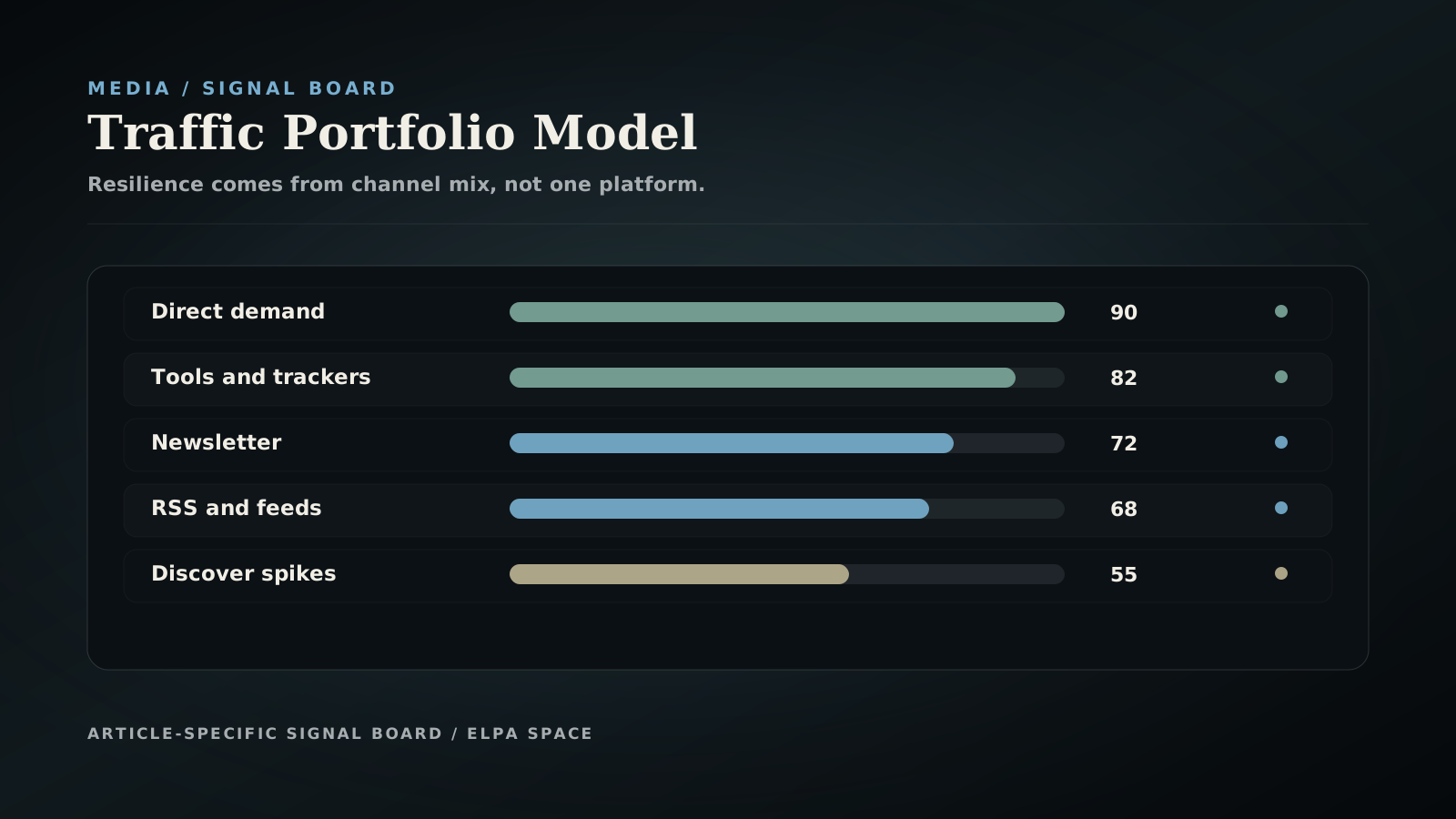
A more resilient approach is a distributed data-ingestion portfolio model. Under this network topology and data-ingestion graph, search index lookups query explicit intent vectors, while recommendation engines compute probabilistic discovery vectors across high-dimensional latent embedding spaces. Feed endpoints (such as XML sitemaps, RSS feeds, and News sitemaps) act as data serialization formats that expose state transition deltas in the document repository, while email newsletter microservices maintain persistent TCP-like communication channels. Dynamic relational database schemas, interactive validation tools, and cryptographic author profiles incentivize repeat connections, whereas third-party social networks provide ephemeral message-queue routing rather than local storage.
Feeds Are Infrastructure
Structured distribution feeds function as critical serialization interfaces for machine-to-machine data exchange in distributed network nodes. XML sitemaps, RSS endpoints, and JSON schemas are not obsolete; they act as standardized pub-sub (publish-subscribe) event buses that notify web crawlers, indexing automata, parser compilers, and microservices of database state updates, reducing the computational complexity of the traversal to O(1) state notifications instead of O(N) graph polling.
| Reader question | What matters now | Editorial answer |
|---|---|---|
| What is Discover good for? | Discovery spikes | Use it, but do not depend on it. |
| What is RSS good for? | Reliable change signals | Treat feeds as distribution infrastructure. |
| What creates resilience? | Return hooks | Build assets readers intentionally revisit. |
Direct Demand Is the Real Moat
Persistent user engagement in information networks is maximized by deploying interactive computational assets: benchmark evaluation series, real-time model telemetry trackers, queryable relational databases, and executable software tools. In this systems paradigm, static textual documents serve as initial routing entry-points in the graph, while interactive database schemas and Turing-complete stateful software tools build habitual client-server transactions.
Every major article should point toward a durable reason to return: an author, feed, tracker, dataset, tool, or recurring beat.
A fault-tolerant web application architecture optimizes for search engine indexers by exposing clean JSON-LD metadata and semantic schemas. By presenting structured, easily parsed trees to search engine parsing automata, the system minimizes compiler parser complexity and index database overhead, while establishing direct peer-to-peer TCP/IP sockets that bypass external recommenders.
Entities In This Article
The article connects 3 named entities across 2 semantic clusters.
- Google Discover
Google feed surface that can recommend indexed content without a user query.
- RSS
Syndication format for publishing machine-readable content updates.
- Newsletters
Direct audience distribution format outside search feeds.
Editorial Transparency
This article is produced inside ELPA SPACE's controlled AI-assisted editorial workflow. The named human editor remains responsible for publication quality, sourcing, updates, and corrections.
The byline identifies the author and the editor. Author profiles explain background, editorial responsibilities, and disclosure notes.
AI tools may help with research organization, draft iteration, metadata, and quality checks, but factual claims must be checked against reliable sources.
The page is created to explain an AI infrastructure shift for readers who follow models, agents, compute, search, and media distribution.
Readers can challenge a claim through the corrections channel. Material corrections are reflected in the update date when needed.